
Couples Therapy in Los Angeles, CA | David Strah, Licensed Therapist
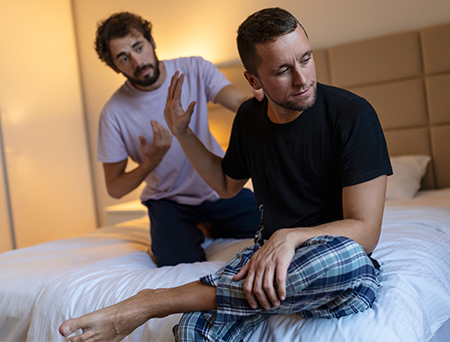
Most couples don’t walk into therapy on a good day. They come in after the same argument has happened one too many times. Or after a silence that’s lasted so long neither person remembers how it started. Or after something happened that cracked the foundation and now you’re not sure what’s left.
If any of that sounds familiar, you’re not in a bad relationship. You’re in a relationship that needs some real attention.
At David Strah’s private practice in Los Angeles, CA, couples therapy gives you and your partner a structured, honest space to figure out what’s actually going wrong — and what it takes to fix it. This isn’t about picking sides. It’s about understanding the patterns underneath the conflict and building something better.
Sessions are available in-person and via teletherapy, serving couples across Los Angeles County including West Hollywood, Beverly Hills, Santa Monica, Silver Lake, Culver City, Brentwood, Westwood, Sherman Oaks, Studio City, Los Feliz, Encino, and beyond.
Who This Practice Serves
David Strah’s Los Angeles practice welcomes all couples — married, unmarried, engaged, and long-distance. This is an LGBTQ+-affirming practice, and sessions are conducted with cultural sensitivity and without judgment regardless of your background, identity, or relationship structure.
Couples who come here include:
- Married couples working through years of built-up resentment
- Newlyweds navigating the reality of living together long-term
- Engaged couples who want to build a strong foundation before the wedding
- Partners dealing with a specific crisis: infidelity, a major loss, a family conflict
- LGBTQ+ couples seeking a therapist who genuinely understands their experience
- Couples from different cultural or religious backgrounds managing differences
- Long-distance couples who need help staying connected across the miles
- Blended families figuring out how to parent and partner at the same time
- Couples who’ve tried therapy before and want something that actually sticks
Whether you’re in crisis or just feel like you’ve been running on empty for too long, this is a reasonable time to reach out.

What to Expect: Your First Session and Beyond
First session nerves are real. Here’s what actually happens.
You’ll both come in and get a chance to share what’s been going on from your own perspective. A good therapist doesn’t walk in already knowing who’s right and who’s wrong. They walk in curious. The goal of the first session is for your therapist to understand the pattern, not render a verdict.
Most couples leave the first session feeling a little lighter, not because the problems are solved, but because someone has finally named what’s actually happening in a way that makes sense to both people.
From there, sessions typically run 50 minutes and happen weekly, especially in the early stages of therapy when you’re building momentum. Some couples move to bi-weekly once real progress takes hold. Some do extended 80 to 90-minute sessions for deeper work. Your therapist will help you figure out the right pace.
Teletherapy for couples is also fully available. If you’re in Mid-Wilshire, Koreatown, Downtown Los Angeles, or anywhere else in Los Angeles County and can’t make it to an office regularly, virtual sessions work well for most couples and are covered by most insurance plans.
What Couples Therapy Actually Does
A lot of people think therapy means sitting in a room while someone nods and says “how does that make you feel?” That’s not what this is.
Good couples therapy is active. Your therapist helps both of you see the cycle you’re stuck in. Not just the content of your fights, but the pattern driving them. Why does every conversation about money end the same way? Why does one partner shut down the moment the other raises their voice? These aren’t personality flaws. They’re patterns. And patterns can change.
Here’s what couples therapy in Los Angeles can help with:
- Constant conflict and communication breakdown
- Emotional distance and disconnection
- Trust issues and recovering from infidelity
- Intimacy problems, including sexual issues
- Disagreements about parenting, finances, or major life decisions
- Codependency or unhealthy attachment dynamics
- Jealousy and insecurity getting in the way
- Navigating a big transition together: a move, job loss, illness, or loss of a loved one
- Pre-marital counseling and preparing for marriage
- Considering separation and wanting clarity before deciding
Couples therapy works whether you’re married, engaged, living together, or dating seriously. It works whether you’ve been together for two years or twenty. What matters most is that both partners are willing to show up honestly.
Therapeutic Approaches Used in Couples Sessions
No two couples need the same thing. Sessions draw from several well-researched, evidence-based methods depending on what fits your situation.
Gottman Method
The Gottman Method is one of the most research-backed approaches in couples therapy. It’s built on decades of relationship research and focuses on building what researchers call the “Sound Relationship House” — trust, commitment, friendship, and the ability to manage conflict without causing damage. If your relationship is stuck in criticism, defensiveness, contempt, or stonewalling, this method directly targets those patterns.
Emotionally Focused Therapy (EFT)
EFT works by identifying the emotional cycles underneath surface-level conflict. Most couples aren’t really fighting about dishes or scheduling. They’re fighting because one person feels unseen and the other feels criticized and both are scared. EFT helps couples recognize those deeper emotional needs and respond to each other in ways that actually feel safe. Research shows roughly 70% of couples who complete EFT move from distress to recovery.
Cognitive Behavioral Therapy (CBT) for Couples
CBT helps partners identify the thoughts and interpretations that fuel conflict. If your first instinct is always to assume bad intent when your partner does something frustrating, CBT helps you examine whether that assumption is accurate and what it’s costing you. It’s practical, structured, and tends to produce results that are visible fairly quickly.
Attachment-Based Therapy
Most relationship problems trace back to attachment. How you learned to connect with people growing up shapes every close relationship you have as an adult. Attachment-based therapy helps couples understand their styles (secure, anxious, avoidant) and how those patterns play out with each other. This is especially useful if one or both partners grew up in environments where emotional connection felt unsafe or unpredictable.
Imago Relationship Therapy
Imago therapy is built on the idea that we’re drawn to partners who reflect unresolved dynamics from our childhood. That’s not a design flaw. It’s actually an opportunity to heal old wounds through the relationship itself. Imago uses structured dialogue to help partners communicate in ways that feel genuinely heard rather than defensive.
Psychodynamic Couples Therapy
This approach looks at how each partner’s history, past relationships, and unconscious expectations are shaping what’s happening now. It’s a deeper-dive approach that works especially well when couples have recurring conflict that doesn’t respond to practical tools alone.
Mindfulness-Based and Narrative Approaches
Sometimes what’s needed isn’t a new communication skill but a different way of seeing the relationship story you’ve been telling. Mindfulness-based therapy builds present-moment awareness that helps partners respond rather than react. Narrative therapy helps couples externalize their problems and rewrite the stories they’ve been living by.
Fees, Insurance, and Practical Logistics
Couples therapy in Los Angeles typically runs between $200 and $350 per session, depending on the therapist’s experience and the nature of the work. This is higher than the national average, and that reflects the real cost of running a quality private practice in this city.
A few things worth knowing about insurance and couples therapy:
Most insurance plans don’t cover couples therapy directly. Insurance companies require a mental health diagnosis to approve reimbursement, and relationship distress isn’t a diagnosable condition on its own. However, if one partner has a diagnosable condition like anxiety or depression, sessions may be billed under individual therapy codes and partially covered. It’s worth a call to your plan before assuming.
HSA (Health Savings Account) and FSA (Flexible Spending Account) funds can often be used for therapy, including couples therapy, which brings the actual out-of-pocket cost down meaningfully.
Sliding scale fees are available for clients who qualify. Reach out before your first appointment to talk through options.
A free consultation is offered to all new clients. It’s a no-pressure call to ask questions, talk about what’s going on, and decide if this feels like the right fit.
Credentials, Licensing, and Professional Background
David Strah is a California BBS-licensed therapist with clinical experience working with couples and adults across Los Angeles.
Credentials and affiliations may include:
- Licensed Marriage and Family Therapist (LMFT), Licensed Clinical Social Worker (LCSW), or Licensed Professional Clinical Counselor (LPCC)
- Gottman Method trained
- EFT trained therapist
- Member of the California Association of Marriage and Family Therapists (CAMFT), the National Association of Social Workers (NASW), or the American Psychological Association (APA)
- LGBTQ+-affirming practice
- Verified profiles on Psychology Today, Zocdoc, and Therapist.com
- Positive verified client reviews on Google Business Profile
All sessions are conducted within a fully HIPAA-compliant, confidential framework. Both partners’ privacy is protected throughout.
Frequently Asked Questions
Does couples therapy actually work, or is it a last resort?
Couples therapy works best when you don’t wait until you’re in full crisis mode. The research is pretty clear on this. The American Association for Marriage and Family Therapy reports that over 90% of clients say they feel better emotionally after treatment, and more than three-quarters report improvements in their relationship. The couples who struggle most in therapy are the ones who waited 5 or 6 years after problems started before reaching out. Honestly, the sooner you go, the easier it is. You don’t need a catastrophe to justify it.
Will the therapist take sides?
No. A skilled couples therapist doesn’t have a side. Their client is the relationship, not either individual. That said, a good therapist will name things directly when something isn’t working. If one partner is being dismissive or if a dynamic is harmful, that gets addressed. But that’s different from playing favorites. The goal is for both partners to feel heard and understood in the room.
What if my partner refuses to come?
This is more common than you’d think. If your partner isn’t ready to come, individual therapy can still be a useful starting point. Working on your own communication patterns, your attachment style, and your responses to conflict often shifts the relationship dynamic even when only one person is in the room. Sometimes that shift is what gets the reluctant partner curious enough to try. And if they still won’t come, individual therapy helps you get clear on what you need and what you’re willing to do.
Does insurance cover couples therapy in Los Angeles?
Most insurance plans don’t cover couples therapy directly because it requires a diagnosable condition for reimbursement. Relationship distress alone doesn’t qualify. However, if one partner has a diagnosable condition like anxiety, depression, or PTSD, some sessions may be covered under individual therapy billing codes. HSA and FSA accounts can often be used to pay for couples therapy with pre-tax dollars. The best first step is to call the member services number on the back of your insurance card and ask specifically about outpatient mental health benefits and whether CPT code 90847 (family/couples psychotherapy) is covered under your plan.
How long does couples therapy take?
It depends on what you’re working through and how consistent you are. Some couples see meaningful change in 8 to 12 sessions when they’re dealing with a specific issue and both partners are fully engaged. Others benefit from 6 to 12 months of regular work, especially when the patterns run deep or there’s been a serious breach of trust. There’s no single timeline that fits everyone. What matters is that you and your therapist are checking in regularly on your progress and adjusting the approach as needed.
Is teletherapy for couples as effective as in-person sessions?
For most couples and most concerns, yes. Research consistently shows that teletherapy outcomes are comparable to in-person therapy. The format works especially well for couples with demanding schedules, those who live in different areas of Los Angeles County, or anyone who finds it easier to be honest from a familiar environment. That said, some deeper body-based or trauma work is better done in person. Your therapist will help you decide which format makes the most sense for your goals.
What’s the difference between couples therapy and marriage counseling?
Mostly just language. Marriage counseling and couples therapy describe the same kind of work: two partners, a licensed therapist, and a focus on improving the relationship. Some people use “marriage counseling” to mean shorter-term, problem-focused support and “couples therapy” to mean deeper, longer-term work. But there’s no official distinction. What actually matters is the therapist’s training, their approach, and whether it fits what you need.
Ready to Get Started?
You don’t have to have it all figured out to reach out. Most couples don’t know exactly what they need when they first call. They just know something isn’t working.
If you’re in Los Angeles, whether in West Hollywood, Santa Monica, Beverly Hills, Studio City, Encino, or anywhere across Los Angeles County, couples therapy with David Strah is available in-person and via teletherapy.
Start with a free consultation. No pressure. Just a real conversation to see if this feels right.